Our Environmental Technology Working Group member Gen Mandre spoke to Delfi about the importance of nature-based water solutions in cities.
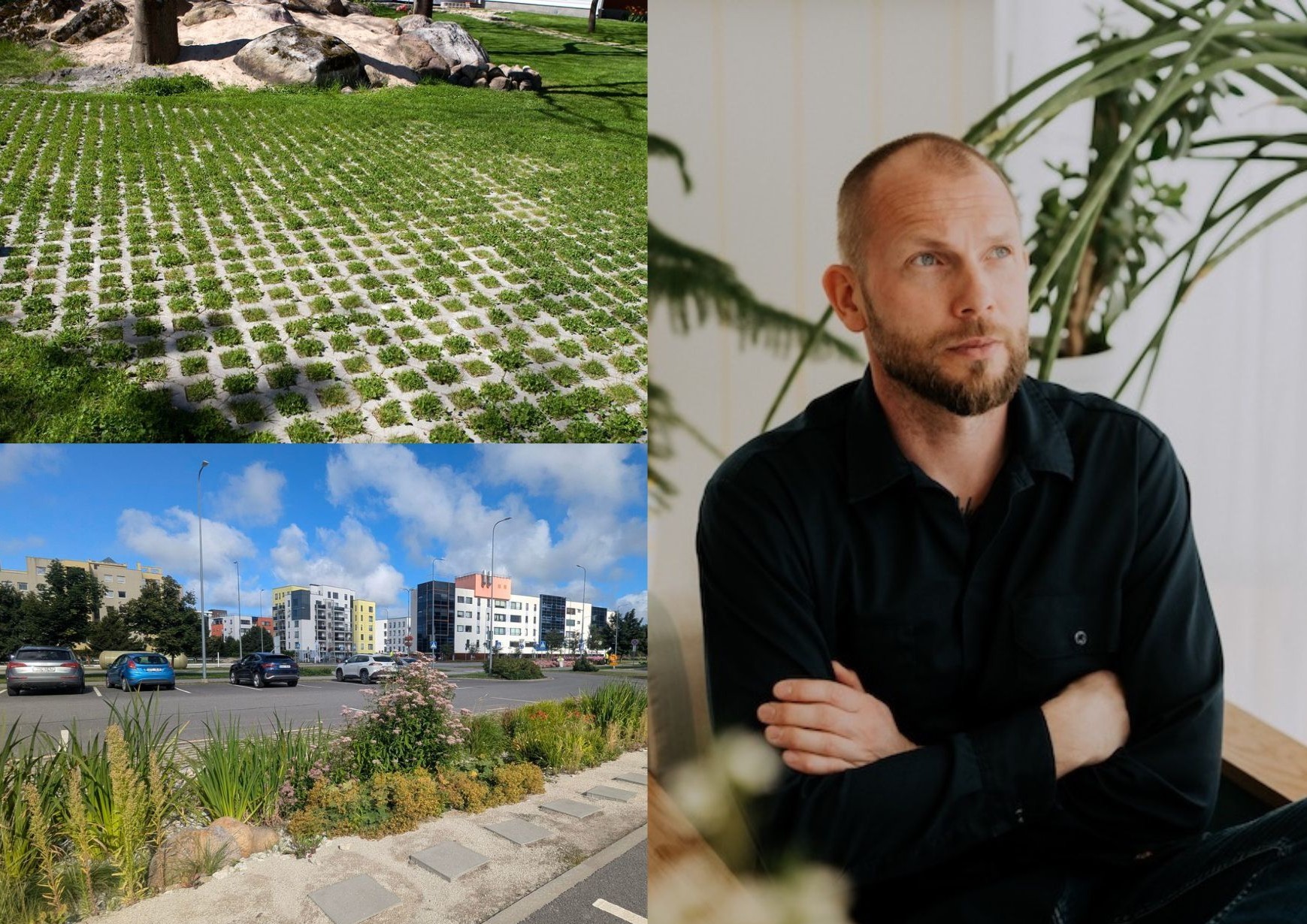 Grass pavers and rain gardens help retain rainwater. Photo authors: Ilmar Saabas, Margit Kõiv-Vainik ja Triin Sööt.
Gen pointed out that current stormwater systems can no longer cope with increasingly intense rainfall, and there is also no space underground for larger pipes.
Nature-based solutions such as green roofs, rain gardens, permeable surfaces, retention ponds and infiltration systems help retain rainwater and slow its flow into drainage systems, reducing pressure on infrastructure and lowering flood risks.
Gen emphasized that these solutions often do not require major investments, but rather a different mindset in urban design. For example, existing green spaces can function as temporary water retention areas if access for stormwater is ensured. Even small interventions, such as directing water from drains into green areas, can change water flow paths so it does not immediately enter the sewer system. Mistakes are often made in small details — for example, curbs may be placed in front of rainwater-collecting green areas or water may be directed to the wrong place in planning, preventing natural buffer zones from functioning properly.
A common issue increasing flood risks in cities is the paving and asphalt surfacing of private yards, often done to avoid muddy driveways. Unfortunately, hard surfaces prevent water from soaking into the ground, and runoff may travel several blocks away to lower-lying areas where flooding occurs.
According to Gen, grass pavers are a good alternative — they are durable, do not become muddy, and still allow water to infiltrate into the soil.
Read full article here.